Can You Install a Swimming Pool on a Balcony or Terrace? Requirements, Risks, and Owner Liability
At first glance, such a solution may seem harmless: the pool is relatively small, water appears to be a lightweight load, and the balcony is part of the owner’s private property. However, from both a technical and legal perspective, the situation is more complex.
Before installing a pool, property owners should consider not only personal comfort but also the structural load capacity of the building, legal requirements, and potential consequences for neighbors.
Who Owns a Balcony in an Apartment Building?
Many property owners assume that a balcony completely belongs to them as part of their private property. However, legally it is necessary to distinguish between the right to use a balcony and ownership of the structural elements of the building.
Under Article 36 of the Housing Code of the Russian Federation, structural elements of a multi-unit residential building that ensure its safety and operation are considered common property of all owners.
These elements include:
- balcony slabs;
- load-bearing structures;
- façade elements and external structures.
This means that an apartment owner has the right to use their balcony, but cannot perform actions that may damage common property or create risks for other residents.
In addition, Article 30 of the Housing Code of the Russian Federation establishes the obligation of property owners to respect the rights and legitimate interests of their neighbors.
Is It Possible to Install a Swimming Pool on a Balcony?
In most apartment buildings, installing a swimming pool on a standard balcony is considered a technically risky decision.
The main issue is the weight of water. Many people underestimate the load created by even a relatively small pool.
For example: pool dimensions: 2 × 2 meters, water depth: 50 centimeters, such a pool would contain approximately 2,000 liters of water, which equals around 2 tons of additional weight — excluding the weight of the pool structure, equipment, and people using it.
Standard balconies are designed to withstand specific calculated loads and are generally not intended for heavy structures containing large volumes of water.
In addition to the weight factor, other risks must also be considered:
- damage to waterproofing;
- water leakage;
- moisture penetration into the façade;
- flooding of apartments below;
- damage to neighbors’ property.
Can a Pool Be Installed on a Terrace in a Modern Residential Complex?
The situation may differ depending on the type of property.
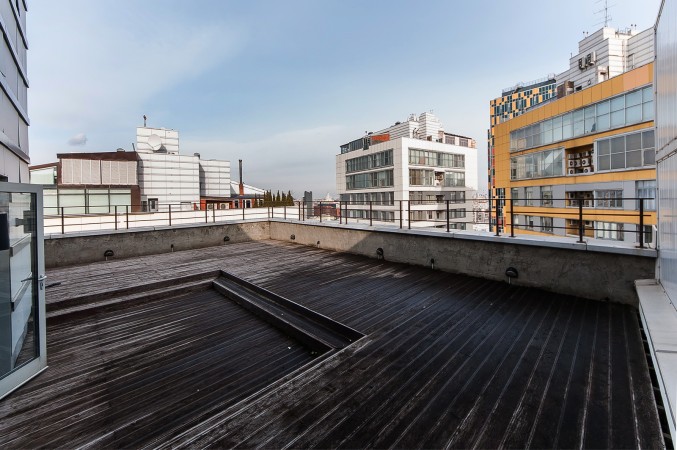
Modern business-class and premium residential developments often include large terraces or specially designed outdoor areas that may have been engineered to withstand higher loads.
However, even in such properties, installing a swimming pool should only be considered if it is supported by technical calculations and complies with the original building design.
Installing heavy structures without confirming the permissible load capacity may create serious risks.
What Liability May Apply for Installing a Pool on a Balcony?
If a swimming pool installation causes damage to neighboring apartments or affects the building’s structural elements, the property owner may be required to eliminate the consequences and compensate for the damage caused.
According to Article 1064 of the Civil Code of the Russian Federation, damage caused to another person’s property must be compensated by the person responsible for causing that damage.
In practice, the main risks are usually not related to the pool itself, but to possible consequences:
- flooding of neighboring apartments;
- repair costs for damaged premises;
- restoration of building elements;
- disputes with the building management company and other owners.
What Should Be Considered Before Installing a Pool on a Balcony?
Before placing a pool on a balcony or terrace, it is important to evaluate:
Type of structure — whether it is a standard balcony, enclosed balcony, or a specially designed terrace.
Permissible load capacity — whether the structure can safely support the additional weight.
Leakage risks — the condition of waterproofing and possible impact on the façade.
Potential consequences for neighbors — even minor leaks can result in significant damage.
A balcony may be part of an apartment, but it is also part of the building’s overall structure. Therefore, any unusual use of this space should take into account not only the owner’s wishes but also the safety of the entire building.
Real Estate Expert Opinion
When owning or using a property, many owners consider an apartment primarily as a private space, overlooking the fact that certain building elements have technical limitations and are connected with the interests of other residents. This is especially relevant for properties with unique architectural features, including terraces, large balconies, and outdoor living areas.
Before installing heavy structures on a balcony or terrace, it is important to evaluate not only the visual appeal of such a solution but also the technical characteristics of the property. In premium real estate developments, these possibilities may be incorporated into the original design; however, they must always be supported by engineering calculations and proper documentation.
Responsible property management is not only a matter of comfort but also an important factor in preserving the long-term value of the asset.