Why Moscow New-Build Prices Are Rising and Which Areas to Choose in 2026
For private investors, the current situation creates a challenging environment. The previous strategy of buying any premium property at the early construction stage no longer guarantees returns. Today, profitability in development projects has become highly selective, and investment success now depends on a deep understanding of internal pricing mechanisms and the correct choice of location.
The foundation of price growth: what drives the cost per square meter
There is a common misconception that Moscow’s primary housing market is driven solely by artificial demand. In reality, the key drivers of price growth lie in construction cost structures and shifts within the market itself. The transition of the construction industry to project financing with escrow accounts has removed developers’ ability to undercut prices. Developers are no longer dependent on buyers’ funds at early stages, while bank financing comes with a fixed cost that is embedded into the final price of the product.
Previously, buyers carried significant risk: if a developer went bankrupt, they could lose both money and the property. Today, buyer funds are held in special escrow accounts in accredited banks. Developers cannot access these funds until the building is completed and the first keys are handed over. If construction is frozen, the bank simply returns the money to the buyer. On the other hand, this increased security has fundamentally disrupted the old investment model and contributed to rising housing prices.
At the same time, the construction sector is facing rising costs for imported finishing materials, complex engineering equipment, and building automation systems. Supply chains have become longer, while a shortage of skilled labor on construction sites forces companies to increase wages. All these factors create a high baseline cost level below which prices simply cannot fall. However, even taking these factors into account, “quality concrete assets” and Moscow land remain one of the most reliable instruments for capital preservation and growth.
Investment strategy: the three leaders of the Moscow market
In a high-cost borrowing environment, investors are shifting focus toward assets with maximum liquidity. These are locations with unique geographical advantages, strong infrastructure development potential, or a clear shortage of high-quality available land. The center of value appreciation has moved toward the premium and business segments, where buyers are least dependent on mortgage financing. At the current stage of urban development, three key districts demonstrate the strongest capital growth.
Khamovniki: a zone of absolute liquidity
Khamovniki’s historical status as the capital’s main aristocratic district makes its real estate virtually immune to economic downturns. The key investment advantage of the area lies in its physical inability to expand. There is almost no available land left for new development, and every new project automatically becomes a collectible asset.
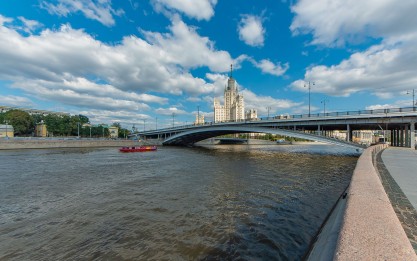
Investors choose this location for capital preservation and for rental income at the highest rates in the city. A strong example of a well-positioned investment in Khamovniki is the large-scale Luzhniki Collection, being built on the Luzhnetskaya Embankment. The project benefits from a rare combination of first-line waterfront positioning and proximity to Moscow’s main sports and park cluster. The architectural concept of club residences and a large private park creates a self-contained ecosystem within the development.
Today, the average price per square meter in elite new developments in the district is fixed in the range of 1.5 to 2.7 million rubles, and buying at the construction stage allows investors to secure an entry price before it reaches its peak.
Khoroshevo-Mnevniki and the new vector of the Greater City
The north-west of Moscow is undergoing a large-scale construction renaissance driven by the integrated development of the Mnevniki floodplain and surrounding embankments. Khoroshevo-Mnevniki has become a key platform for the formation of the so-called “Greater City.” The district attracts a young, economically active audience that values both nature and proximity to the country’s main business cluster.
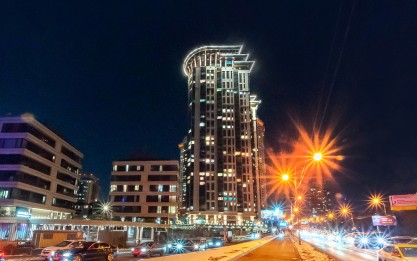
Its investment appeal is supported by major transport infrastructure development, including the construction of the Rublyovo-Arkhangelskaya metro line, and the creation of a continuous system of landscaped embankments. New business and premium-class developments emerging in former industrial zones by the river show rapid value growth: the average price level today stands at approximately 650,000–850,000 rubles per square meter, significantly lower than central districts while offering comparable quality of life.
This makes it an ideal location for investors planning resale at the peak of infrastructure completion or targeting long-term rental demand from top executives in technology and financial corporations.
Paveletsky business cluster: investing in the southern gateway to central Moscow
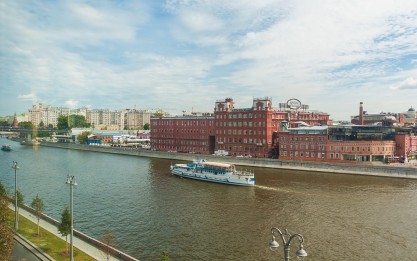
The area around Paveletsky Railway Station and Derbenevskaya Embankment has made a dramatic transformation in recent years, evolving from an industrial fringe of the Garden Ring into one of the city’s most in-demand business hubs. Development is accelerating rapidly. The construction of modern Class A office centers has created strong demand for high-quality housing within walking distance.
The Paveletsky cluster is attractive due to high rental yields. Residential high-rise developments in the area fill up much faster than traditional suburban districts. The average price per square meter in new developments remains in the range of 800,000–960,000 rubles, showing steady positive dynamics as the district continues to replace its industrial legacy with modern public spaces, restaurants, and conceptual parks.
The growth of prices in Moscow’s new-build residential market is a long-term trend. Today, investors need to move away from standard, template-based decisions in favor of in-depth analysis of locations. Khamovniki, Khoroshevo-Mnevniki, and the Paveletsky area today represent balanced investment destinations capable not only of protecting capital from inflationary pressure, but also of generating real income through the qualitative transformation of the urban environment surrounding ongoing developments.