Technology and Smart Home Systems in Moscow’s Luxury Developments: What Buyers Expect in 2026
The technological sophistication of luxury homes has changed status. Today, it is a baseline requirement—without it, a product is no longer considered modern or premium. But what actually constitutes a high-quality technological foundation? Ashtons International Realty explores the key trends in the luxury segment and helps distinguish real value from marketing noise.
How the Concept of the “Smart Home” Has Evolved
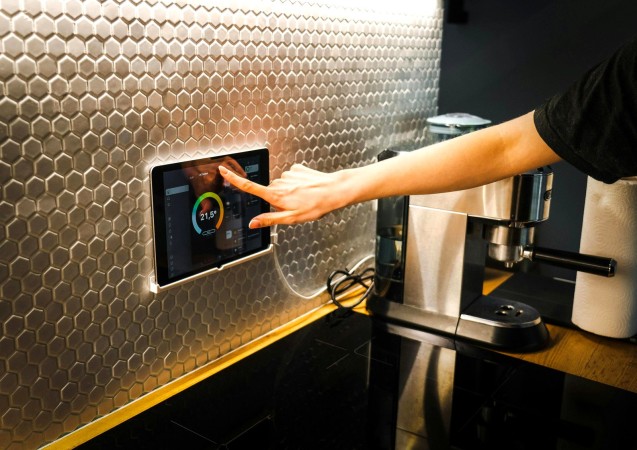
A “smart home” is an integrated system that connects all household appliances, sockets, switches, and sensors within an apartment. The core idea is automation: devices no longer operate in isolation but communicate with each other. Instead of manually pressing buttons, residents delegate routine tasks to automation and control the home via smartphone or voice commands.
In the 2010s, a smart home in the luxury segment meant a centralized control system operated via a dedicated console, managing lighting, climate, and audiovisual equipment. Such systems cost between RUB 3–15 million and had to be programmed individually for each home. Adding a new device or changing a scenario required the original installer—creating long-term dependency on the contractor.
By 2026, the concept has fundamentally changed.
First, open ecosystems: standard protocols such as Matter, Zigbee, and Z-Wave allow devices from different manufacturers to operate within a single system without vendor lock-in.
Second, smartphone-based control: no central console is required, everything operates through standard mobile and tablet applications.
Third, voice control has become a basic feature supported by major assistants.
Fourth, automation has become adaptive: systems learn household rhythms and suggest optimizations—warming floors before residents wake up, filling a bathtub via voice command, dimming lights toward night.
Fifth, security: the same sensors that control lighting and climate also monitor occupancy and detect anomalies within the home.
What a Modern Luxury Home Must Offer as a Minimum
1. Internet infrastructure.
High-speed internet with redundancy: two independent lines from different providers to ensure uninterrupted connectivity. Enterprise-level Wi-Fi covering the entire property without dead zones, and wired Ethernet in key locations such as offices, living rooms, and children’s rooms.
2. Lighting.
Multiple lighting scenes that can be switched via app, voice, or physical wall panels. Dimmable lighting and adjustable color temperature in every room, with predefined scenarios such as “guest reception,” “evening relaxation,” or “sleep mode,” often aligned with circadian rhythms.
3. Climate control.
Individual thermostats per room with zoning capabilities. Living rooms can be cooler, bedrooms warmer, bathrooms with heated floors. Systems adjust based on occupancy. Many premium residences also include central air conditioning with room-by-room control.
4. Multimedia systems.
Integrated audio and video systems: distributed speakers across key areas, a central media hub, and high-quality projectors or large-format displays in main living spaces. Dedicated home cinema rooms include full acoustic insulation.
5. Security and access control.
Surveillance systems covering entrances or residential blocks, biometric smart locks, video intercoms, smoke and gas detectors, and leak sensors—all integrated into a central platform and controlled via a resident app.
Smart Building Infrastructure, Energy Efficiency, and Green Technologies
Modern luxury developments increasingly feature centralized digital access control via smartphone-based keys, smart parking systems that detect available spaces and automatically open barriers, and elevators that recognize residents and bring them directly to their floors.
A “digital concierge” has become a defining feature. Through a dedicated app, residents interact with the management company, request services, book shared spaces, and receive notifications about deliveries and guests. In top-tier developments, the app becomes the primary interface between residents and the building.
Building engineering systems are also becoming intelligent. Air quality sensors in common areas automatically regulate ventilation, while predictive maintenance systems monitor heating, water supply, and electrical infrastructure—identifying potential failures before residents notice any issues.
A major trend is energy efficiency. Leading 2026 projects achieve energy class A or A+ under Russian standards, consuming 40–55% less energy than conventional buildings. This is achieved through high-performance façades, advanced glazing, heat recovery ventilation systems, efficient HVAC systems, and, in suburban developments, renewable energy sources such as solar panels and heat pumps.
For buyers, this matters for two key reasons: cost savings and resilience. Annual utility savings compared to older buildings can reach RUB 500,000–1.5 million, while energy-efficient homes are less dependent on external infrastructure and more resilient to outages.
Sustainability-focused developments go further, incorporating water collection and recycling systems, low-carbon materials, and green roofs with live vegetation. While still not mainstream in Russia, such solutions are already appearing in the most advanced projects and align with international standards such as BREEAM and LEED.
Privacy and Information Security
For luxury buyers, privacy and data security are particularly sensitive issues. Protection operates on several levels.
The first is infrastructural: the building’s local network is separated from the public internet by enterprise-grade firewalls, with encrypted traffic and continuous vulnerability monitoring.
The second is application-level: smart home data—such as occupancy, device usage, or media consumption—is processed locally rather than transmitted to external cloud servers, significantly reducing the risk of data leaks.
The third is physical segmentation: separate networks are used for different functions—home control, surveillance, and multimedia systems. A dedicated “privacy mode” can disable cameras and microphones instantly, while guests are provided with isolated access that does not connect to core systems.
Cost of a High-End Smart Home System
A high-quality smart home system for a 200 sq. m luxury apartment typically costs between RUB 3–8 million in 2026. While basic systems can be installed for RUB 1.5–2 million, the professional-grade range lies within this higher bracket.
In premium segments such as penthouses and country residences, costs can reach RUB 15–40 million due to larger scale, system complexity, integration with wellness and security infrastructure, and heightened privacy requirements. High-end estates often include redundant systems with local servers to ensure full autonomy from the internet.
Wellness Technologies in Residential Spaces
Wellness technologies are emerging as a distinct category. What was once limited to fitness clubs and medical facilities is now entering luxury residences: air quality monitoring with automatic purification and ionization, multi-stage water filtration systems with mineralization, and programmable shower systems with adjustable intensity, temperature, and even light therapy.
In premium developments, this extends further: SPA zones with integrated control of lighting, sound, aroma, and temperature; adaptable spaces for yoga and meditation; smart mirrors with telemedicine functions; and sleep management systems that synchronize lighting and climate with sleep cycles.
These features are becoming part of the new standard for luxury housing.
What Will Change in the Coming Years
Several technologies are expected to become mainstream in the luxury segment within the next 3–5 years:
-Artificial intelligence in home management, enabling increasingly precise adaptation to household routines.
-Biometric access systems, including facial recognition, voice authentication, and even gait analysis.
-Augmented reality in interiors, including smart mirrors and projection-based digital overlays.
-Integrated telemedicine systems within residences, enabling continuous health monitoring and remote consultations.
-Partial or full energy autonomy of luxury homes, reducing dependence on external utility networks.
Ashtons has experience working with a range of installation specialists and is ready to recommend trusted partners—those who understand the luxury segment from the inside and are committed to delivering the highest possible quality of life.
In 2026, technology in Moscow’s luxury real estate has ceased to be an exotic feature and has become an integral part of the product itself. Understanding what truly high-quality technological solutions are and how to evaluate them means making the right decisions both when buying and when selling. Ashtons International Realty helps clients navigate these questions and make choices that ensure both a high standard of living and the long-term value of the asset.