Shifts in the Luxury Country House Market in Early 2026
Key Market Shifts: From the Emotional Buyer to the Rational One
Throughout 2022–2024, the upper end of the country house segment evolved under conditions of heightened emotional demand. The legacy of the pandemic, the reorientation of domestic capital flows, restrictions on foreign investment, and an objective shortage of quality supply all encouraged buyers to act swiftly — at times forgoing the extended due diligence customary in the luxury segment. By the start of 2026, the behavioural model has fundamentally changed. Today's client compares dozens of properties, analyses transaction data within a five- to ten-kilometre radius, commissions legal opinions on the land plot, and scrutinises engineering systems and construction quality with the rigour once reserved for commercial real estate acquisitions.
We attribute this shift to several factors. First, the cost of capital in the economy remains elevated: a portion of wealth that might otherwise have funded the purchase of a third or fourth residence is being retained in money-market instruments offering double-digit returns. Second, a wave of properties acquired during the overheated phase of 2022–2023 has now entered the secondary market, and their owners are confronting the realities of revaluation. Third, the buyer base has grown younger: active demand is now driven by entrepreneurs aged 35 to 50, for whom a country residence is not merely a lifestyle choice but a component of an asset portfolio with clearly defined turnover periods and exit horizons.
Prices, Supply, and the Structure of Demand
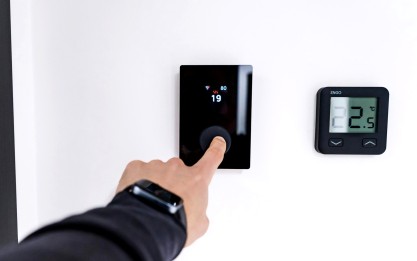
According to Ashtons analysts, the weighted-average value of residences in the premium and luxury segments along the key corridors — Rublyovo-Uspenskoye, Novorizhskoye, Minskoye, and Kaluzhskoye — gained approximately 4 to 7 percent in January and February 2026 relative to year-end 2025. The primary driver of this appreciation is the contraction in the share of quality completed inventory, rather than any broadening of demand. The market is increasingly becoming a market of best-in-class assets: the premium commanded by architectural distinction, a waterfront plot, fifth-generation smart-home engineering, a meticulously crafted landscape, and proximity to an established community of residents adds as much as 20 to 25 percent to the average price per square metre.
The volume of active inventory in the luxury country house market has contracted by roughly 8 to 12 percent compared with the same period in 2025. The decline is especially pronounced in the sub-segment of completed houses spanning 600 to 900 square metres on plots of 30 sotka (approximately 0.3 hectares) or more — the core format for buyers seeking a second family residence. At the same time, the share of projects under construction within the active inventory is rising: developers are returning to the country house narrative after several years of conservative positioning.
The structure of demand has likewise evolved. Whereas in 2022–2023 more than 60 percent of enquiries received by our agency concerned properties priced below 300 million rubles, by the first quarter of 2026 this share had fallen to 48 percent, while the segment of 500 to 900 million rubles and above had expanded to 22 percent of total enquiries. The explanation lies in the concentration of solvent demand within a narrow cohort of buyers with long planning horizons. For this cohort, a country residence serves as an instrument of capital preservation rather than an impulse purchase.
The Rublyovo-Uspenskoye Corridor: A Premium for Heritage
At the start of 2026, the classic Rublyovka corridor retains its standing as Russia's most expensive country house market. The median residence price in established business- and luxury-class villages — from Zhukovka and Usovo to Gorki-2 and Razdory — sits in the range of 1.8 to 3.2 billion rubles per lot. Premium gated communities with proprietary infrastructure, including schools, clubhouses, spas, and tennis academies, trade at still higher levels. Price growth here at the beginning of the year reached approximately 5 to 6 percent, though it was far from uniform: the most liquid offerings appreciated by as much as 10 percent, while assets featuring dated architecture and floor plans from the 2008–2012 era corrected downward by 3 to 5 percent.
The principal buyer on Rublyovka today is a second-generation representative of family wealth, raised in Moscow and returning to familiar surroundings after several years spent abroad. For this buyer, transport accessibility to an office in Moscow City, proximity to schools for children, and a club-oriented social environment carry no less weight than the house itself. This is precisely why we see sustained demand for residences of 700 to 1,200 square metres featuring contemporary architecture, panoramic glazing, and an emphasis on plot privacy. Smaller lots of up to 500 square metres without generous grounds are, by contrast, selling more slowly than a year ago.
The Novorizhskoye Corridor: A Market of Projects Under Construction
In 2026, Novaya Riga is consolidating its reputation as the most dynamic corridor in terms of quality new supply coming to market. Developers, having recognised the shift in buyer expectations, are redirecting their emphasis from selling built volume to selling a way of life and a holistic product. Club villages now incorporate amenities that were previously absent: underground garages accommodating four to six vehicles, private guest lodges for visiting family members, clubhouse restaurants helmed by Moscow chefs aspiring to Michelin recognition, and children's development centres holding international programme accreditation.
The average price per square metre in new premium villages along Novaya Riga at the start of 2026 falls within the range of 650,000 to 980,000 rubles, while in the top-tier projects it has already surpassed the 1.2 million ruble mark. Transaction volumes, however, have grown only modestly — by roughly 3 percent compared with the same period in 2025 — even as inventory expanded by 15 to 18 percent. This is a textbook indicator of a market transitioning from a seller-driven phase to a balanced one, in which competition among projects intensifies and buyers gain the leverage to be selective and to negotiate.
The Minskoye and Kaluzhskoye Corridors and the South-Western Directions: A New Appetite for Seclusion
The Minskoye and Kaluzhskoye highways, still considered less prestigious than their western counterparts as recently as five years ago, are registering structural growth in 2025–2026. The catalyst is the scarcity of landscape-rich plots along Rublyovka and Novaya Riga, coupled with the contemporary buyer's diminishing desire to live in a showcase setting. What today's purchaser seeks is forest, a body of water, the absence of dense neighbouring development, and tranquillity. The south-western corridors meet these requirements more effectively than any other.
The median lot in this area is a residence of 550 to 800 square metres situated on a plot ranging from 50 sotka to 1.5 hectares, within a deluxe-class development designed by contemporary Russian architectural studios and equipped with Scandinavian-standard engineering. The weighted-average transaction value in the premium sub-segment during the opening months of 2026 came to approximately 220 to 350 million rubles, reflecting an increase of 8 to 10 percent. By way of comparison, in the eastern and south-eastern parts of the Moscow region, where no established luxury market exists, only isolated transactions above 200 million rubles take place — and these are predominantly land purchases intended for bespoke construction projects.
A New Standard of Quality and Rising Buyer Expectations
By early 2026, a definitive checklist of requirements for a premium and luxury residence has crystallised — one that just three years ago existed only at the level of individual preferences. Today it constitutes a non-negotiable standard, the absence of which immediately places a property in the category of those not worth considering. This checklist encompasses: an energy-efficient building envelope with performance metrics comparable to European A and A+ classifications; mechanical ventilation with heat recovery; independent backup power generation; central air conditioning; and a comprehensive security and access-control system integrated into a single application. All engineering solutions must be fully transparent to the buyer: project documentation, concealed-works certificates, and contractor guarantees are expected as a matter of course. Architecture, too, has become subject to scrutiny: buyers now routinely enquire who designed the house, who provided design supervision, and whether the property has been featured in professional publications.
A distinct trend is the demand for wellness-oriented amenities within the residence. This no longer means a simple sauna and swimming pool, but rather a fully realised wellness cluster: a hammam, a herbal sauna, a salt room, a cryotherapy chamber, a counter-current swimming zone, a massage room, and a gymnasium fitted with professional-grade equipment. By our estimates, the presence of such a cluster adds 8 to 12 percent to a property's value and significantly reduces time on the market — by an average of 30 to 40 percent compared with houses lacking wellness infrastructure.
The Primary Market Segment: The Return of Major Developers
The first half of 2026 marks the return to the country house market of major urban developers, including publicly listed companies. They bring with them tools that were previously rare in the country house segment: mortgage programmes through partner banks in the premium price bracket, instalment plans during construction, escrow accounts, transparent reporting to buyers, and professional-grade marketing. All of this is transforming the perception of the product: the buyer of a premium house no longer feels that every risk falls on their shoulders, as was the case during the era of private builders.
According to our data, at the start of 2026 approximately 25 premium country house projects at various stages of construction are in active sales, with a combined inventory of more than 900 residences and plots. Roughly one third of these are being developed by companies for which the country house market represents a new line of business diversification. These players are setting a new benchmark for service quality: regular site tours, virtual three-dimensional presentations, individualised floor-plan customisation, and transaction support delivered by teams of dedicated client managers.
The Financial Architecture of Transactions: New Emphases
The financial structure of a typical transaction in the luxury country house segment has undergone notable changes in early 2026. Whereas the share of mortgage-financed deals in the bracket above 300 million rubles previously stood at approximately 10 to 12 percent, it has now declined to 5 to 7 percent. This is a direct consequence of elevated benchmark interest rates: buyers prefer to settle from available cash reserves, draw on dedicated credit lines through private banking arrangements, or structure the transaction through the disposal of other assets. Simultaneously, the volume of transactions involving structured payment mechanisms has increased — vendor-financed instalment plans or trust-based arrangements for buyers declaring capital sources to their banks.
Tax and legal structuring has become an integral part of the transaction. Buyers are increasingly acquiring properties through legal entities — Russian holding structures specifically created for the ownership of family assets. This approach addresses succession planning, enhances the asset's liquidity for future resale, and simplifies the involvement of a family office in property management. Ashtons International Realty provides end-to-end support for such transactions, from property selection through to notarial and corporate execution.
Rental as an Alternative: Rapid Growth of the Segment
Alongside acquisition, the long-term rental segment for premium country houses is developing actively in early 2026. The premium tenant of 2026 is typically either a family that has relocated to Moscow for a one- to three-year period, a prospective buyer who wishes to trial a location before committing to a major purchase, or a senior executive of an international group on an extended assignment. According to our data, the average monthly rental rate for a fully finished and furnished house of 600 to 800 square metres along the Rublyovo-Uspenskoye or Novorizhskoye corridors, complete with full village infrastructure, ranges from 1.8 to 3.5 million rubles. Demand for such properties exceeds supply: in certain locations, the listing period has shortened to 10 to 15 days, compared with the customary 45 to 60.
For owners, rental has become a viable model for monetising an asset that is not intended for sale within the next two to three years. It generates net annual returns of 4 to 6 percent on invested capital after taxes and operating costs — exceeding comparable instruments offering a similar level of security. The agency operates rental management programmes encompassing tenant selection, legal support, property condition monitoring, and financial reporting to the owner.
Forecast: What to Expect from the Market in 2026
Based on the dynamics of the first quarter of 2026, we anticipate that the luxury country house market will continue to develop along a trajectory of moderate growth in the quality segment accompanied by stagnation elsewhere. Price appreciation in the premium and luxury sub-segments over the course of the year is expected, by our assessment, to reach 10 to 15 percent, with the most liquid properties — completed houses in established villages, equipped with wellness amenities, contemporary architecture, and properly structured legal documentation — likely to gain 15 to 20 percent. Illiquid inventory characterised by dated architecture, complex legal histories, and unremarkable locations will continue to correct downward.
Transaction volumes in the premium segment are expected, by year-end, to increase by 8 to 12 percent relative to 2025 levels. The bulk of the contribution will come from transactions in the upper portion of the price range — above 500 million rubles. We also forecast a growing role for the club-village format, in which the buyer acquires not so much a house as membership in a particular community of neighbours and a way of life.
The year 2026 will definitively affirm a thesis that Ashtons International Realty has consistently conveyed to clients for several years: luxury country real estate is not an alternative to a Moscow apartment, but a distinct asset class with its own logic of liquidity, risk, and return. Working with it effectively demands specialised expertise, a long planning horizon, and a team of professionals capable of guiding the transaction from the first viewing through to the handover of keys and beyond.


Ashtons International Realty Recommendations for Buyers and Owners
For buyers considering the acquisition of a country residence in 2026, we recommend looking beyond a single corridor. Comparing offerings across the Rublyovo-Uspenskoye, Novorizhskoye, Minskoye, and Kaluzhskoye directions will yield a more precise understanding of where the location premium is justified and where the market has already moved ahead of product quality on price. The optimal strategy is to define a profile of the ideal asset before commencing viewings and to benchmark every property against it, rather than being distracted by attractive yet irrelevant propositions.
For owners planning a sale, it is essential to recognise that the era of rapid transactions characteristic of 2022–2023 has passed. A successful sale in 2026 requires thoughtful pre-sale positioning: price adjustment in line with the current market, pre-sale preparation including home staging and facade and landscape refreshment where necessary, professional photography, assembly of the legal documentation package, and a carefully calibrated marketing campaign. The agency provides a full-cycle service for the sale of luxury country real estate, including confidential club sales to clients within our proprietary database — an approach that frequently enables a property to be sold before it ever reaches the open market.
The beginning of 2026 is a time for deliberate, strategically informed decisions in the luxury country house market. Ashtons International Realty stands ready to serve as your partner at every stage: from initial consultation and property selection through to transaction support, rental management, and the construction of a long-term strategy for your family's real estate portfolio.